New US Treasury Rules Mandate Crypto Tax Reporting Starting in 2026
The U.S. Treasury Department finalized broker reporting requirements for digital asset transactions on July 15, mandating gross proceeds and cost basis disclosures for all crypto sales starting with the 2026 tax year.
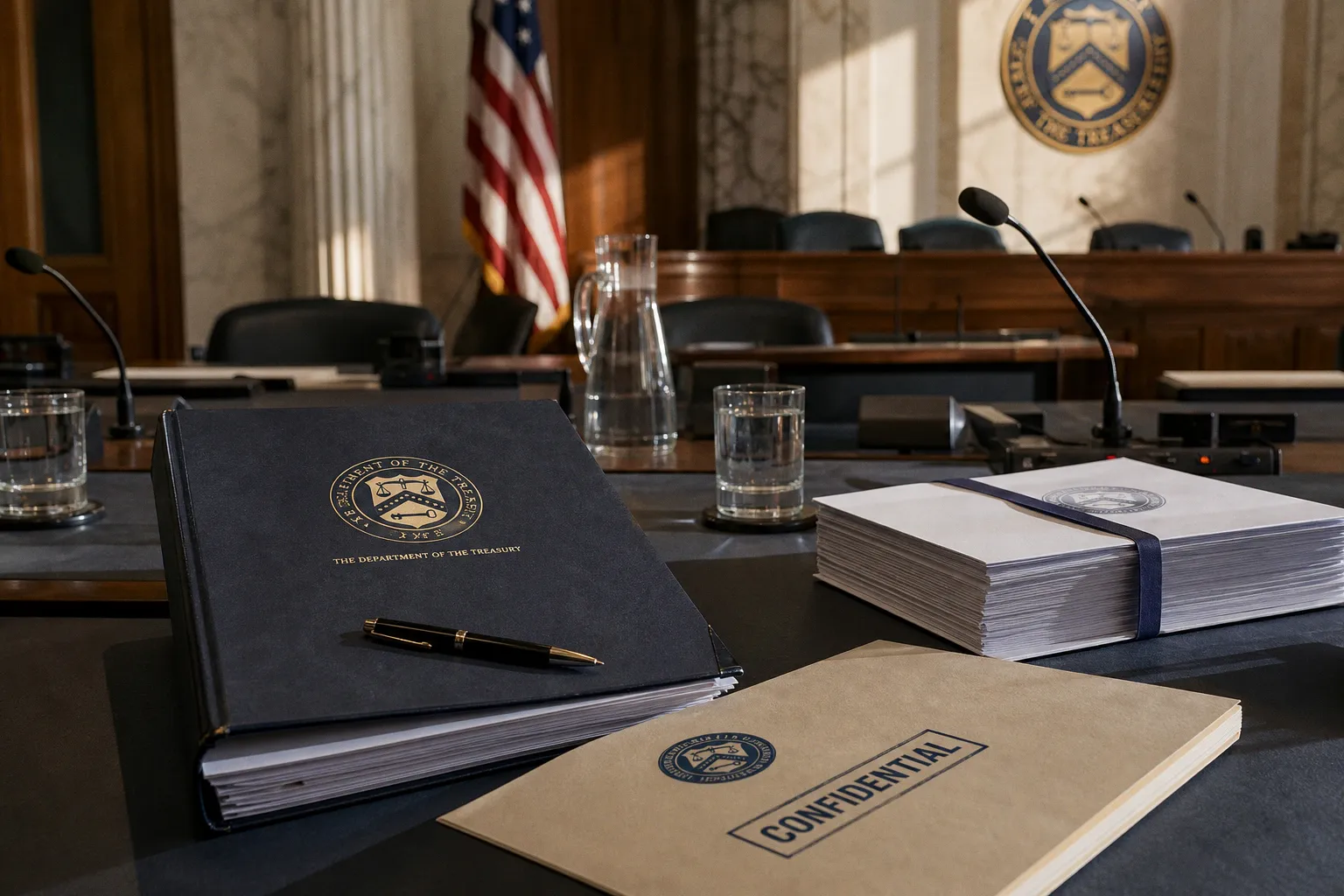
The rule locks in a compliance framework that forces centralized exchanges, custodians, and certain DeFi front-ends into the same reporting posture as traditional securities brokers. For market participants running multi-jurisdictional strategies, this is a structural shift — not a headline to scroll past.
What the rule actually mandates
Confirmed by Treasury's official release: brokers must report both gross proceeds and cost basis for digital asset dispositions. This closes the gap between Form 1099-B treatment for equities and what crypto platforms have been doing voluntarily — or avoiding.
- Gross proceeds: total sale value at transaction time.
- Cost basis: original acquisition price, required for accurate capital gains calculation.
- Reporting start: 2026 tax year filings.
The mechanics are straightforward. The operational lift is not. Platforms need infrastructure to track basis across wallets, bridges, and wrapped assets — a non-trivial data pipeline problem.
Market structure implications
This rule accelerates institutional onboarding by standardizing tax reporting. It also raises the compliance cost floor for smaller brokers and offshore platforms serving U.S. persons. Expect consolidation pressure on mid-tier exchanges lacking the engineering budget to build basis-tracking systems from scratch.
The timing coincides with T. Rowe Price launching an actively managed multi-asset crypto ETF — a signal that traditional asset managers see a cleaner regulatory perimeter as investable. Compliance infrastructure becomes a competitive moat.
Worth noting: global supply chains are already diversifying away from concentrated dependencies, and the same logic applies here. Jurisdictional arbitrage in crypto brokerage is compressing. Platforms that relied on regulatory ambiguity face a drawdown in that particular edge.
What to track next
Three signals to monitor:
1. IRS guidance on DeFi front-ends — the rule's scope for non-custodial platforms remains the unresolved variable.
2. Cost basis methodology — FIFO, specific identification, or weighted average. Treasury hasn't locked the election method yet.
3. Compliance-driven TVL migration — if offshore platforms lose U.S. retail flow, watch for liquidity sink effects on thinner order books.
The yield sustainability verdict: this rule doesn't kill crypto trading, but it formalizes the tax leakage layer. Net returns after reporting compliance costs will compress for high-frequency retail strategies. Institutional allocators, conversely, get the regulatory clarity they've demanded. The arb window for unreported gains is closing — plan accordingly.