What is the purpose of blockchain technology?
The purpose of blockchain technology is not to put every database on a chain, nor to make a token tradable.
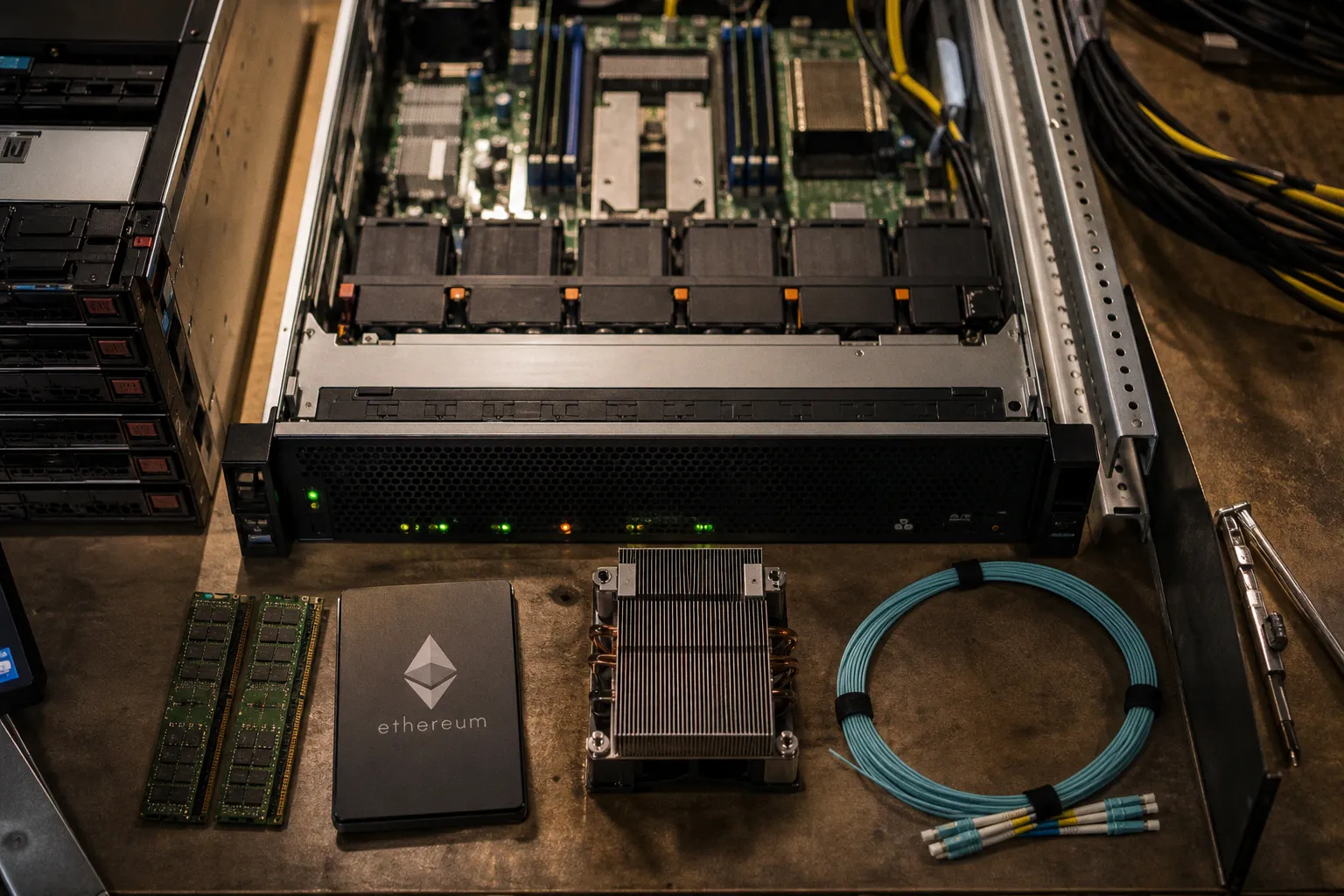
At its best, blockchain gives a network of people and applications a shared record they can verify without appointing one company as the permanent referee.
That sounds simple until you look at the user experience. A person buying an NFT, voting in DAO governance, moving assets to a Layer 2, or signing into a dApp is rarely thinking about “immutable ledgers.” They are asking more basic questions: Did my transaction happen? Who can change this record? Can I take this asset somewhere else? And if something goes wrong, is there anyone—or anything—I can trust?
Blockchain’s job is to make those answers less dependent on private intermediaries. The hard part is doing that without replacing bank-like gatekeepers with confusing wallets, fragile bridges, expensive transactions, and invisible infrastructure dependencies.
The immutable ledger: a shared source of truth
At its core, blockchain is a distributed ledger. Transactions and other records are grouped into blocks, linked cryptographically, and replicated across independent participants. Once the network accepts a block, rewriting its history becomes extremely difficult and economically costly.
That is the direct answer to what is the purpose of blockchain technology: to create a record that multiple parties can use and verify even when they do not fully trust one another.
In traditional digital systems, the operator owns the database and the rules around it. Your bank updates the balance. A game publisher decides whether an item remains available. A social platform can change the terms, close an account, or alter what data is visible. There are often sensible reasons for that central control—speed, customer support, fraud handling—but it concentrates power.
A public blockchain changes the arrangement:
- The ledger is shared. Participants can independently inspect the same transaction history rather than requesting confirmation from a single operator.
- Rules are executable. Smart contracts can enforce conditions around transfers, voting, collateral, royalties, or access without a staff member approving each action.
- Digital ownership can be portable. Assets can move between compatible wallets and applications instead of sitting only inside one company’s account system.
- Settlement is native to the network. The record and the transfer of value can occur in the same system, rather than being reconciled across several private ledgers later.
The word “immutable” needs a little discipline here. Blockchain records are not magic objects that are beyond all human influence. A smart contract can contain a bug. A community can coordinate a software upgrade. A user can be tricked into signing a malicious approval. But the ledger’s history is deliberately hard to edit in secret, and that distinction matters.
For communities with real governance stakes, that public trail is often the point. Members can see how a proposal passed, how a treasury moved funds, or whether a token distribution followed published rules. The chain does not guarantee fair governance. It does make governance actions more legible.
Blockchain is useful when the cost of agreeing on the record is lower than the cost of trusting one gatekeeper to own it.
Consensus is the machinery behind the promise
A blockchain cannot simply let every participant write whatever they like. It needs a consensus mechanism: a way for the network to agree which transactions are valid and which version of the ledger is canonical.
Bitcoin popularized Proof-of-Work, where miners compete to solve computational puzzles and earn the right to add blocks. This model made a strong early case for open, adversarial consensus. Nobody needed permission to verify the chain, and changing old records required enormous computing power.
The trade-off was obvious: security was tied to energy-intensive computation.
Ethereum took a different route on September 15, 2022, when it moved from Proof-of-Work to Proof-of-Stake in the upgrade known as The Merge. The shift reduced Ethereum’s energy consumption by roughly 99.95% to 99.98%. Instead of miners expending electricity, validators stake ETH and participate in proposing and attesting to blocks.
Here is the practical comparison.
| Parameter | Proof-of-Work | Proof-of-Stake |
|---|---|---|
| Core security input | Computing power and electricity | Staked assets and validator incentives |
| Block producers | Miners | Validators |
| Main operating cost | Hardware and energy | Capital locked as stake, hardware, operations |
| Environmental footprint | High relative energy use | Dramatically lower energy use |
| Primary participation barrier | Specialized mining economics | Stake requirements and validator operations |
| Main centralization concern | Concentrated hash power and industrial mining | Concentrated stake, custodial validators, coordinated behavior |
Proof-of-Stake did not make participation frictionless. A solo Ethereum validator requires a 32 ETH deposit. Operators also need reliable hardware—commonly a quad-core CPU, 16GB to 32GB of RAM, and a 2TB SSD—plus stable connectivity and the willingness to maintain it.
That gap between the protocol’s open-access promise and the lived reality is worth watching. Many users do not hold 32 ETH. They delegate to staking providers, use liquid staking tokens, or leave assets on exchanges. Those tools can lower user friction, but they may also concentrate voting power and operational influence in a smaller set of entities.
And Proof-of-Stake is not immune to coordination risk. A sufficiently large bloc of stake can disrupt finality; the relevant threshold is more than one-third of the total stake for finality delays. The point is not that the system fails by default. The point is that decentralization is maintained through incentives, client diversity, validator distribution, and community vigilance—not claimed once and then permanently secured.
Scaling is where blockchain meets ordinary user expectations
The base layer is designed to be credible under adversarial conditions. It is not designed to process every low-value interaction cheaply at global scale.
That is why Layer 2 scaling solutions matter. They move much of the transaction activity off the main chain, then submit compressed transaction data or proofs back to Layer 1. The goal is not to abandon the base layer. It is to use it as the settlement and security anchor while giving users cheaper, faster interaction elsewhere.
For anyone using a wallet, the difference can feel less like a technical architecture choice and more like whether a dApp is usable on a Tuesday afternoon.
Two major rollup approaches dominate the conversation: Optimistic Rollups and zero-knowledge, or ZK, Rollups.
| Parameter | Optimistic Rollups | ZK Rollups |
|---|---|---|
| Default assumption | Transactions are assumed valid unless challenged | Transaction batches are accompanied by cryptographic validity proofs |
| Fraud handling | Fraud proofs can dispute an invalid state transition | Validity proof verifies the batch before finalization |
| Withdrawal experience to Layer 1 | Often involves a challenge period, typically around seven days | Can enable near-instant withdrawals once proofs are verified |
| Core UX tension | Lower complexity in some designs, but long canonical exits | Faster settlement, but proof systems and tooling are more complex |
| Trust and infrastructure questions | Sequencer operation and fraud-proof maturity | Prover operation, sequencer design, and implementation complexity |
Optimistic Rollups essentially say: “Treat this batch as valid unless someone successfully proves otherwise.” That creates a challenge period, commonly about seven days, before a withdrawal is final on Ethereum. In practice, users often avoid waiting by using liquidity providers or bridges—but then the apparent speed comes from another layer of infrastructure and another set of incentives.
ZK Rollups take a different path. They generate cryptographic proofs that a batch of transactions followed the rules. That supports quicker finality for withdrawals, which is much closer to what users expect from a modern payment or trading interface.
Neither model erases risk. Rollups introduce smart-contract dependencies, sequencer design choices, and governance questions around upgrades. A chain can be technically decentralized at the validator level while a user’s daily experience still depends on a centralized sequencer, a wallet provider, and an RPC endpoint.
That is not an argument against Layer 2s. It is the reason to describe them honestly. The purpose of scaling is to extend blockchain’s shared-verification model to more people and more frequent use—not to create a maze where every click crosses three trust boundaries nobody can see.
A fast transaction is not automatically a decentralized transaction. The relevant question is which party still has the power to pause, reorder, censor, or upgrade the experience.
Decentralized storage makes ownership more durable
A blockchain is expensive storage. Putting full images, videos, application files, and large datasets directly on-chain is rarely practical. But the ownership layer still needs something durable to point to.
That is where decentralized storage networks such as IPFS, Filecoin, and Arweave enter the picture. They are part of the broader purpose of blockchain technology because a token or smart contract is only as meaningful as the content, metadata, or application state attached to it.
NFTs are the clearest example. A token may exist permanently on Ethereum or a Layer 2, but its image, traits, and media are often stored elsewhere. If the metadata sits on a conventional server that disappears, the owner can retain a token whose visible meaning has evaporated.
As of 2025, Filecoin and IPFS were reported to support the storage layer for more than 70% of NFT metadata on Ethereum and Polygon. That does not mean every NFT is permanently safe, or that every pinning arrangement is equally robust. It does show that storage infrastructure is no longer a side issue for digital ownership.
The decentralized storage market was valued at $8.4 billion in 2025 and is projected to reach $72.6 billion by 2034. The headline number is less interesting than the underlying behavior change: Web3 applications are gradually treating data availability, archival persistence, and content addressing as product decisions rather than backend housekeeping.
For a creator community, that can mean art and metadata remain accessible beyond one marketplace’s lifespan. For a DAO, it can mean governance documents, funding records, and public research are not trapped in a single cloud account. For a game, it raises the possibility—still unevenly realized—of assets that outlive one publisher’s server cycle.
There is a cultural layer here, too. Digital ownership is not merely the ability to resell a token. It is the ability to retain a coherent relationship with the thing the token represents. Storage is where that promise either holds up or quietly breaks.
Interoperability is useful—and bridges are the sharp edge
Blockchains do not operate in one clean, shared environment. Assets, applications, and users live across Ethereum, Layer 2s, alternative Layer 1s, and specialized networks. Cross-chain bridges aim to make those worlds interoperable.
They are also one of the most dangerous places in the stack.
More than $2.8 billion has been stolen in bridge hacks to date, including the Ronin Bridge exploit of more than $600 million in 2022. That record does not mean every bridge is inherently insecure. It does mean bridges deserve a different level of scrutiny from a standard wallet transaction.
A bridge often combines several high-risk elements:
1. Custody or lock-and-mint logic. Assets may be locked on one chain while a representation is minted on another. If the verification mechanism fails, the representation can lose its backing.
2. Validator or signer assumptions. Some designs rely on a limited group of operators to attest that a transfer occurred. The smaller or more centralized that group, the more concentrated the risk.
3. Smart-contract attack surface. Bridges are complex contracts handling large pools of assets. Complexity and concentrated value are an uncomfortable combination.
4. User-interface ambiguity. A user may see a familiar token symbol without understanding whether it is native, wrapped, canonical, or issued by a particular bridge.
5. Emergency governance powers. Pause functions can protect users during an incident, but they also reveal who retains operational control.
This is where community education is more valuable than maximalist slogans. A bridge can be well designed, audited, and thoughtfully operated—and still be a higher-risk component than staying within one ecosystem. Users deserve interfaces that explain the route, the asset representation, finality expectations, and recovery limits before the transaction becomes irreversible.
Interoperability is a real part of the blockchain vision. It should not require users to become protocol security analysts just to move an asset between networks.
Smart contracts turn rules into infrastructure, with a real cost
Smart contracts are what let blockchain networks do more than record simple transfers. They can hold a treasury, distribute rewards, run an auction, manage collateral, or enforce the outcome of on-chain governance.
But deployment and execution are not abstract. On Ethereum, gas costs reflect actual computation and storage pressure on the network. A contract deployment includes a base transaction cost of 21,000 gas, a 32,000-gas contract creation fee, 22,100 gas for each storage variable set, and 200 gas per byte of deployed bytecode.
For builders, those numbers create a design discipline. Persisting every piece of data forever is expensive. Bloated contract code costs more to deploy. A product that looks simple in a design mockup may require a careful division between on-chain state, off-chain indexing, decentralized storage, and Layer 2 execution.
For users, gas is often the most visible proof that blockchain infrastructure is still maturing. Nobody joins a community because they want to calculate storage writes. They join because the membership, marketplace, game, social space, or financial tool offers something useful.
The strongest applications make the chain present where it adds real value—settlement, ownership, transparent rules, composability—and almost invisible where it does not.
That also reframes the common search phrasing, “how to check what is the purpose of blockchain technology cryptocurrency blockchain.” The answer is not found in a token price chart. Look at what the application asks the chain to do. Is it creating a verifiable record that multiple parties need? Is it enabling user-controlled assets? Is it coordinating incentives among people who do not share a central operator? Or is it adding a wallet connection to a product that would work better with a normal database?
The purpose is coordination, not complexity
Blockchain technology exists to let strangers, communities, and organizations coordinate around shared digital records without handing the entire system to one intermediary. Its strongest use cases appear where transparency, programmable rules, resilient ownership, and credible settlement outweigh the cost of slower, more constrained infrastructure.
The technology has already changed its own operating model. Ethereum’s move to Proof-of-Stake sharply reduced energy consumption. Rollups are reshaping the economics of everyday transactions. Decentralized storage is giving digital assets a more durable metadata layer. At the same time, bridges, centralized sequencers, staking concentration, and smart-contract failures keep reminding us that decentralization is not a binary feature.
From the trenches of DAO voting pages, wallet pop-ups, and cross-chain dashboards, the test remains stubbornly human: does this system give people more meaningful agency with less user friction, or does it simply move institutional complexity onto the user?
That is the adoption question that matters. Not whether every service needs a blockchain, but whether the places that do can make shared ownership and governance feel as ordinary as clicking “send.”